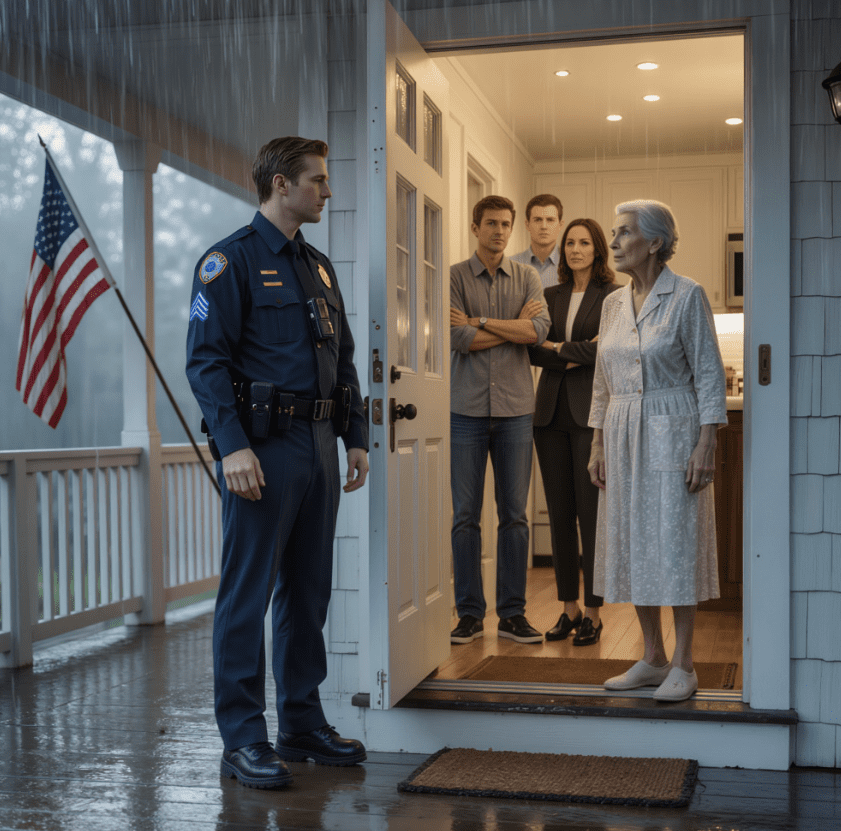
Drzwi zamknęły się z cichym kliknięciem, a cisza, która zapadła, nie była spokojem. To była presja. Moja córka gwałtownie wypuściła powietrze, jak ktoś, kto musi zdjąć maskę, a jej mąż pocierał nasadę nosa, jakby zaczynał go boleć głowa. Stałam przy drzwiach, pewnie stojąc, czekając, które z nich odezwie się pierwsze.
To była ona. Zawsze ona. „Mamo, co ty sobie myślałaś?” – wybuchnęła. „Zrobiłaś z nas manipulatorki przed policjantem. Praktycznie oskarżył nas o kłamstwo”. „Wcale cię nie olałam” – powiedziałam cicho. „Po prostu powiedziałam prawdę”.
Jej mąż prychnął. „Zachowywałaś się, jakbyśmy próbowali cię okraść”. Spojrzałam na niego, a potem naprawdę się w niego wpatrzyłam – w sztywność jego ramion, błysk irytacji, którego nie próbował ukryć. „Złożyłeś wniosek o uznanie zdolności do czynności prawnych” – powiedziałam. „Za moimi plecami. Jak mam to nazwać?”
Moja córka rozłożyła ręce. „Próbowaliśmy ci pomóc. Starzejesz się. Nie zawsze słyszysz telefon. Zapominasz do nas oddzwonić. Martwimy się”. „Martwisz się?” – powtórzyłam. „Bo nie odbieram wystarczająco szybko. To nie jest martwienie się. To niecierpliwość”.
Zacisnęła usta. „Nie rozumiesz, jak kruche mogą być rzeczy. Jeden błąd…” „Nie popełniłam żadnego” – powiedziałam. „Nie z tym domem. Nie z moimi podatkami. Nie z moimi zobowiązaniami. To wy założyliście inaczej”.
Jej mąż zrobił krok do przodu, a jego głos stał się spięty. „Pomyśleliśmy, że czas zaplanować z wyprzedzeniem. To wszystko”. „Planowanie z wyprzedzeniem” – powiedziałem – „wymaga uczciwości, a nie kombinowania po kryjomu”. Przez chwilę nikt z nas się nie poruszył, a promienie słońca rozciągnęły się na dywanie długim, ciepłym pasem, dotykając wszystkiego oprócz nich dwojga.
Wzrok mojej córki powędrował w stronę drzwi gabinetu, gdzie segregator wciąż leżał na biurku. Prawie widziałam, jak narasta w niej niedowierzanie – miała nadzieję, że funkcjonariusz znajdzie chaos, zamęt, oznaki upadku, a zamiast tego znalazł porządek. Odezwała się ponownie, tym razem ciszej: „Mamo, utrudniasz mi to bardziej niż trzeba. Próbujemy tylko pomóc, zanim coś się stanie”.
Mój głos brzmiał spokojnie. „Coś się nie stało. A dopóki się nie stanie, nie potrzebuję opiekunów. Potrzebuję uczciwości, szacunku – niczego więcej”. Jej mąż spojrzał w stronę wyjścia, wyraźnie chcąc odejść. „Może powinniśmy wrócić później”. „Tak” – powiedziałam. „Może powinnaś”.
Moja córka zawahała się, rozdarta między kłótnią a wycofaniem, ale chyba dostrzegła coś w mojej twarzy – jakąś zmianę, której nie rozpoznała – bo w końcu bez słowa podniosła płaszcz. W drzwiach zatrzymała się. „Chcieliśmy tylko tego, co najlepsze”. Spojrzałam jej w oczy. „Więc zacznij od szczerego pragnienia”.
Nie odpowiedziała. Wyszli na zewnątrz, poszli do samochodu i odjechali, nie oglądając się za siebie, zostawiając dom w bezruchu. Ale tym razem cisza wydawała się inna – nie pusta, ale nieobciążona, jakby coś ciężkiego w końcu wysiadło z nimi na podjazd.
Poszłam do kuchni, nalałam sobie świeżej herbaty i usiadłam przy stole, obejmując obiema dłońmi ciepły kubek. Poranne światło przesuwało się po podłodze, powoli i równomiernie, niczym sam czas oddychający obok mnie, i po raz pierwszy od dawna cisza w moim domu wydawała się należeć do mnie.
Po ich wyjściu w domu zrobiło się dziwnie jasno, jakby ich nieobecność zerwała z okien film. Siedziałem przez kilka minut, pozwalając ciszy opaść, ale spokój nie trwa długo, gdy uraza krąży nad nami od miesięcy. Nie minęło dziesięć minut, gdy mój telefon zawibrował – raz, drugi, a potem znowu.
Moja córka odzyskała odwagę, teraz, gdy nie stała już przede mną. Zawsze radziła sobie lepiej, gdy nie musiała patrzeć mi w twarz. Pierwsza wiadomość brzmiała: „Wprawiłeś nas w zakłopotanie przed policjantem”. Druga: „Sprawiałeś wrażenie, że chodzi nam o twoje pieniądze”. Trzecia, dłuższa: „Oto, co dostajemy za próbę pomocy tobie”.
Wpatrywałem się w ekran, nie czując ani gniewu, ani smutku, tylko tępe, zmęczone rozpoznanie. Żyłem wystarczająco długo, by wiedzieć, kiedy czyjaś wersja pomocy jest tak naprawdę krępującą przysługą, od której spodziewają się naliczyć odsetki. Odłożyłem telefon ekranem do dołu na stół i nalałem sobie kolejną filiżankę herbaty. Smakowała lepiej, gdy nikt nie zaglądał mi przez ramię.
Około południa wyszłam na werandę. Powietrze niosło to późne poranne ciepło, które delikatnie osiada na skórze niczym stary przyjaciel, który się do mnie przytula, i wciągnęłam je w płuca. Moja córka myślała, że nie dam rady prowadzić domu. Zapomniała, że dałam radę w życiu pomimo choroby, samotności, pomimo więcej lat pracy, niż ona kiedykolwiek zaliczyła.
Senility wasn’t the issue. Convenience was. I watered the geraniums, trimmed a few wilted stems, and swept the porch, my movements unhurried and deliberate. I wasn’t performing for anyone, but I knew enough to understand that visibility was its own form of quiet defense.
Several neighbors waved as they passed. One of them, Mrs. Callahan, paused at the sidewalk to chat about the weather and her tomatoes. She didn’t ask if I was all right. She didn’t tilt her head with that pitying angle. She spoke to me the same way she had for twenty years, and it was grounding.
When I went back inside, the house was warm with the smell of pine cleaner. I’d started wiping down surfaces without thinking—one of those automatic habits that comes from decades of caring for a space that’s yours. My daughter’s words echoed faintly: You’re making things harder than they need to be.
If only she knew that simplicity wasn’t something children could grant parents. It’s something parents earn inch by inch through a lifetime of holding families together. By late afternoon, the phone rang again. This time, I answered.
Her voice came through sharp and clipped. “Mom, we need to talk.” “I thought we did,” I replied. She ignored that. “Do you realize how serious this is? Officer Carter hinted we filed something inappropriate. He made it sound like a crime.”
“I didn’t make him do that,” I said quietly. “You handed him the robe. He only noticed you tugging it.” She exhaled into the receiver, a long shaking breath. “We were just trying to keep things from falling apart.”
“Things aren’t falling apart,” I said. “You just don’t like that they aren’t arranged the way you want.” Silence met those words—thick, waiting. She wasn’t used to being confronted by the same honesty she wielded so freely.
Finally, she said, “Why are you being so difficult all of a sudden? You’ve never questioned us this much.” “That’s because,” I answered, “I kept believing you still saw me as your mother, not an obstacle to manage.” Another silence, colder this time, and then she snapped.
“Fine. If you want to handle everything yourself, do it. But don’t expect us to fix anything when it goes wrong.” I didn’t raise my voice. “I won’t expect anything.” She hung up, and the click of the receiver lingered in the air like the last note of a song that had played far too long.
I stood for a moment, my hand resting lightly on the counter, feeling neither defeated nor triumphant—just clear. They weren’t angry because I’d embarrassed them. They were angry because I’d stopped bowing my head. The sun dipped slowly outside, casting warm light across the kitchen floor.
I finished my tea, washed the cup, and placed it gently back on the shelf. My hands were steady. Whatever came next, I would face it the same way I’d faced everything else in my life: upright, awake, and unafraid.
The next morning, I woke earlier than usual—not from pain, though my joints had their usual complaints, but from a kind of restless clarity. When someone tries to take your life out of your hands, you feel it long after the threat passes. It sits in your chest like a stone.
By the time the sun reached the porch, I already knew I needed more than indignation. I needed legal footing. Feelings don’t hold up in front of people who see you as replaceable.
I brewed coffee, sat at the kitchen table, and dialed a number I hadn’t used in years—my old neighbor’s son, now a family attorney downtown. He’d once told me, half joking, “If you ever need a lawyer, Mrs. Hensley, call me before things get messy.” I supposed this counted as messy enough.
He answered on the second ring. “Good morning. This is Mark.” “Mark, it’s Margaret Hensley. I’m sorry to bother you.” He paused, then his tone brightened with recognition. “Mrs. Hensley, never a bother. What can I do for you?”
I took a breath. “I need to understand my rights, and I need to make sure no one takes liberties with them again.” He didn’t rush me. He let me explain calmly, plainly, what had happened—the police visit, the false statements, the competency inquiry I hadn’t authorized. There were no dramatics in my telling. I’d lived long enough to know facts carry their own weight without embellishment.
When I finished, he exhaled slowly. “You did the right thing calling me. A competency filing without medical evidence is borderline abusive. At minimum, it’s a misuse of the process.” “It wasn’t the process that frightened me,” I said. “It was their willingness to pretend I was fading just to speed their plans.”
“I understand,” he said gently. “I’d like to meet today. We’ll go over your documents and protections. Are you available at two?” Two sounded perfect. Waiting would only stiffen the worry in my chest. “I’ll be there.”
After hanging up, I changed into a clean blouse and combed my hair until it lay smooth. I wasn’t dressing for him. I was dressing for myself—for the version of me who still believed dignity was something earned in how we showed up to our own defense.
The bus ride downtown was steady and slow, giving me time to think. People always assume older women drift through life half-aware, but the truth is, age sharpens the senses in its own way. You learn what danger feels like long before it knocks politely on your door.
Mark welcomed me into his office with a warm handshake. He’d grown into a serious-looking man, but his smile still had that open, earnest quality I remembered from years ago. He offered me tea, sat across from me at a polished wooden table, and opened a notepad.
“Let’s start with your financial structure,” he said. “Do you have any active powers of attorney?” “No,” I answered, “and I’d like to keep it that way.” He nodded. “Good. Do your daughter or son-in-law have access to any accounts?” “No.” “And your property? Everything is titled solely under your name?” “Yes.”
He smiled faintly. “Then you’re in a strong position. What they attempted has no legal standing.” I felt my shoulders ease just a fraction, but he continued. “It would be wise to reinforce your independence—not because you’re at risk, but because they’ve shown they’re willing to test boundaries.”
He explained my options clearly: updating my will, establishing a protective trust, filing a formal note with the county that any future inquiries must come directly from me. Each step was like putting a lock on a door I hadn’t realized outsiders were rattling.
At one point he looked at me with genuine concern. “Have they pressured you before? Maybe financially or emotionally.” “Not in ways that left marks,” I said, “but enough to leave impressions.” He nodded, understanding more than I’d said.
By the time he finished his outline, I felt something shift inside me—not triumph, not anger, just solidity, the sense of reclaiming ground I’d let others trample out of habit. “I’ll prepare the paperwork,” he said. “You’ll have full control, with buffers against interference. It’s your life, Mrs. Hensley. We’re just making sure the law respects that.”
I thanked him and left the office with a steadier step than I’d had going in. Outside, the afternoon sun felt warm on my face, and as I walked to the bus stop, I realized something simple and strong. I hadn’t defended myself because I was afraid. I defended myself because I finally remembered I was worth defending.
When I got home from the attorney’s office, the afternoon light was settling over the house in that soft, forgiving way it only does when you’ve made a hard decision and stood by it. I set my bag down on the hall table and walked through each room slowly, almost thoughtfully, as though checking the edges of my life for loose seams.
Everything looked the same, but I didn’t feel the same. Strength does that. It doesn’t change the world, just the way you occupy it. My phone buzzed again. I let it ring twice before I picked it up.
It was a voicemail from my daughter, her voice tight, clipped, but controlled. “Mom, we heard you went to see a lawyer. This is unnecessary. You’re escalating things. Please call us back so we can straighten this out.” Her tone made it clear what straighten meant: bring me back into alignment with their plans.
I didn’t call back. Instead, I sat at the dining table and opened the metal box that held my financial records. I’d kept everything over the years—bank statements, insurance summaries, tax receipts, a lifetime of order laid out in crisp paper.
As I sorted through the stacks, I noticed a pattern I hadn’t allowed myself to truly see until now: the frequency of small withdrawals made for emergencies, the gifts that had turned into expectations, the quiet way responsibility had shifted from them to me without any discussion. There was no crisis buried in these pages, only evidence of slow, persistent taking.
A pozwoliłam na to, bo wierzyłam, że hojność to rodzaj miłości. Dziś zrozumiałam, że hojność bez granic staje się drzwiami, przez które każdy może przejść. Zrobiłam notatki do analizy Marka – konta do wzmocnienia, płatności do restrukturyzacji, tytuły do weryfikacji – moje pismo staranne, przemyślane, umysł jasny i spokojny.
Wiek nie odebrał mi niczego, co miało znaczenie. Ludzie po prostu zakładali, że tak.
Przeczytaj dalej, klikając poniższy przycisk (CZYTAJ WIĘCEJ 》)!